
Advanced features
These settings control how the project is processed and how recovered information is presented.
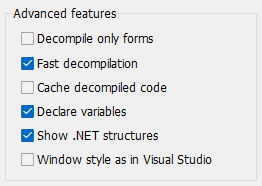
Decompile only forms
Disables code decompilation when you need only recovered form and UserControl definitions. For the visual viewer and its technology-specific capabilities, see Visual form reconstruction.
Fast Decompilation
When enabled, VB Decompiler processes the project structure first and decompiles individual procedures as you open them. This reduces the initial wait when investigating selected procedures. With Cache decompiled code disabled, you can change analysis settings and reopen a procedure to obtain a new listing.
Enable Analyze prototypes in the Decompilation settings to perform preliminary heuristic analysis of private procedure signatures. This adds initial processing time but can improve argument reconstruction without requiring full decompilation.
Fast Decompilation does not provide a complete searchable high-level listing of the project. Disable it and process the file again before using whole-project text search or exporting a complete decompiled project. String References are different: they can be collected through preliminary disassembly and are available in Fast Decompilation mode.
Full decompilation
With Fast Decompilation disabled, the decompiler processes the project's procedures in advance. This takes longer, but makes the complete generated listing available for text search and export. Changes to decompilation settings require processing the file again.
Cache decompiled code
Retains already generated listings in Fast Decompilation mode. This avoids repeatedly decompiling an opened procedure, but cached results do not reflect later analysis-setting changes. When comparing Parse stack parameters or Procedure analyzer and optimizer settings interactively, disable caching.
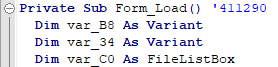
Declare variables
Adds a declaration block for recovered variables at the start of each decompiled procedure. This is useful for source recovery and type inspection. For a concise behavioral review, you may prefer to hide the declarations. Recovered types are subject to the metadata and analysis available to the decompiler.
Show .NET structures
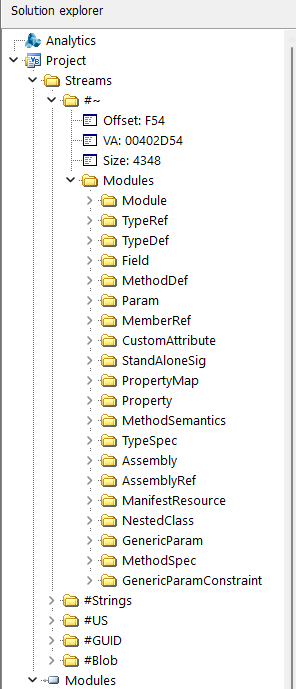
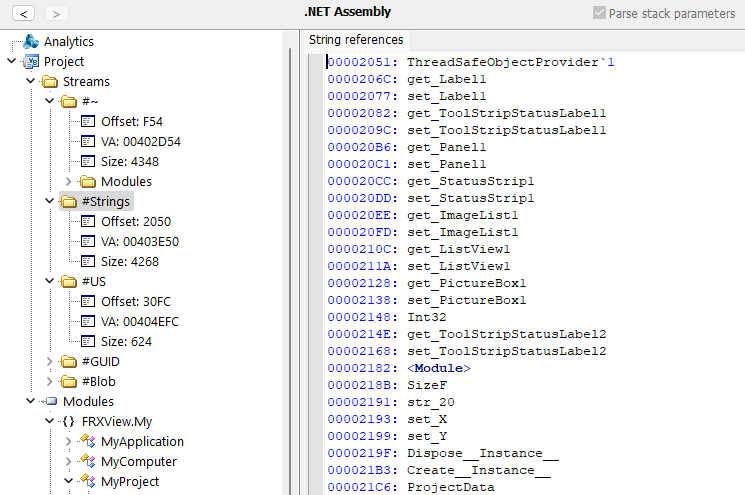
Exposes .NET metadata tables and heaps in Solution explorer. Use it to inspect structures and signatures alongside the code. Selecting a table displays its contents; the #US heap contains user strings. Disable the option when you do not need metadata navigation.
Window style as in Visual Studio
Places the code on the left and Solution explorer on the right. This changes the workspace layout without changing the recovered code.